
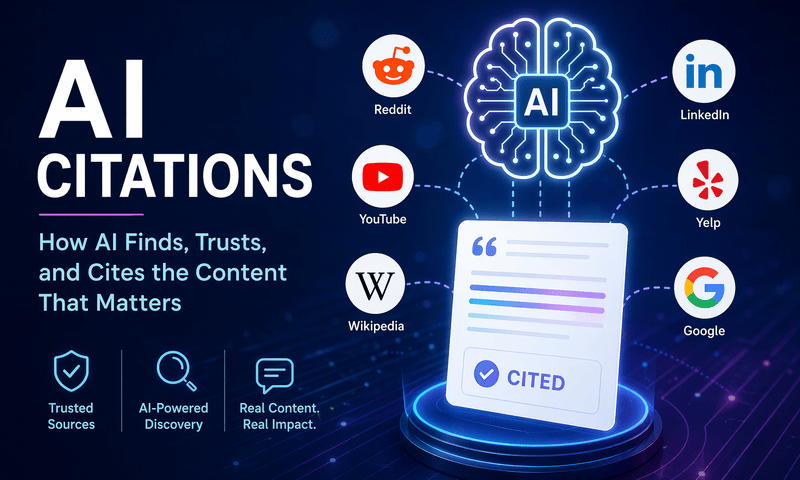
How to Get Your Business Cited by AI using High-Authority Platforms
If you’re trying to rank in AI search results, your website alone isn’t enough anymore. The platforms AI trusts most are places like Reddit, YouTube, LinkedIn, and Yelp, where real content and engagement happen daily. If your business isn’t showing up on these sites, you’re missing a major piece of the visibility game.
How AI Chooses What to Cite (And What the SEMrush and Search Engine Journal Studies Reveal)
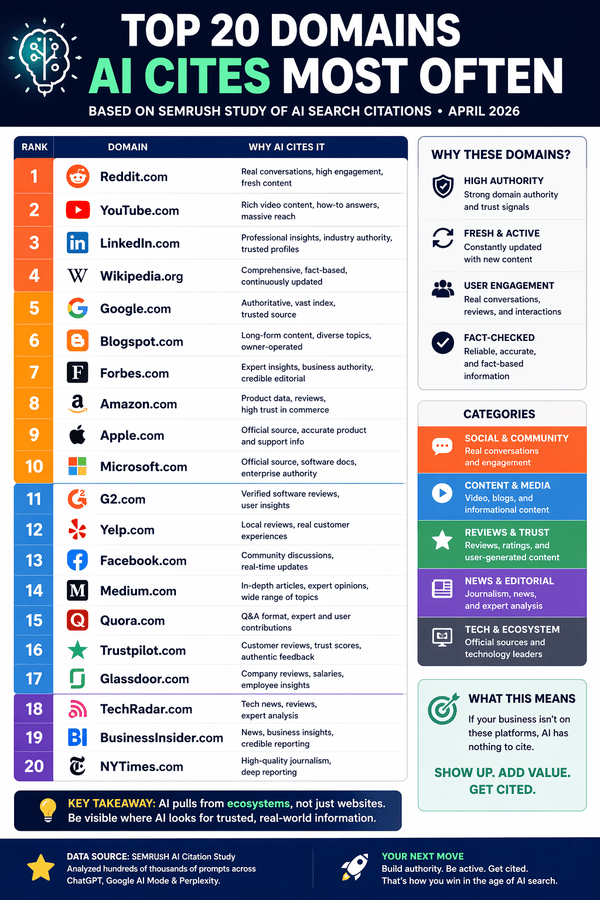
AI doesn’t just pull answers from random websites. It leans heavily on high authority platforms that consistently produce fresh, trusted, and widely referenced content. Separate studies by Search Engine Journal and SEMrush analyzed AI-generated search results and found a clear pattern: platforms like Reddit, YouTube, LinkedIn, Wikipedia, and Forbes dominate citations. These sites aren’t just authoritative, they’re constantly updated and heavily engaged with, which makes them prime sources for AI to trust.
The study also highlighted platforms like G2, Yelp, Facebook, Medium, and TechRadar as frequent citation sources. The common thread is simple: user-generated content, strong domain authority, and constant activity. AI systems prioritize content that reflects real-world usage, opinions, and up-to-date information, which is why these platforms consistently outrank traditional static websites.
The takeaway is straightforward. If your business only exists on your website, you’re limiting your visibility. AI is pulling from ecosystems, not isolated domains. To get cited, you need to position your brand within these high-authority platforms so AI can find you, validate you, and include you in its responses.
The Four Signals AI Uses to Decide Who Gets Cited
AI doesn’t randomly choose sources, it looks for specific signals to determine what content is worth citing. These signals help it filter out noise and prioritize content that is relevant, trustworthy, and useful. If you understand these four signals, you can reverse engineer your visibility and position your brand to show up consistently.
Conversation Signals
Conversation platforms show AI what real people are actually talking about right now. These signals come from discussions, questions, and back-and-forth engagement that reflect current sentiment and real-world use cases. AI values this because it helps validate relevance and context beyond static content. If your brand is part of these conversations, it increases the likelihood of being recognized as active and credible.
Explanation Signals
Explanation signals come from content that clearly teaches, demonstrates, or breaks down a topic. This includes tutorials, walkthroughs, and educational content that answers specific questions in a structured way. AI prefers this type of content because it can easily extract and repurpose it into direct answers. The clearer and more helpful your explanations are, the more likely AI is to reference them.
Trust Signals
Trust signals are built through reviews, ratings, and consistent customer feedback across platforms. These signals help AI determine whether a business is reliable and widely accepted by real users. Volume, recency, and detail of reviews all play a role in strengthening trust. If your brand consistently shows positive engagement, AI is more likely to view it as a safe source to cite.
Authority Signals
Authority signals come from high-level publications, backlinks, and mentions on well-known platforms. These sources are already trusted by AI, so being featured or referenced there boosts your credibility instantly. Authority is less about frequency and more about where you are being mentioned. The stronger your presence on recognized platforms, the more likely AI is to treat your brand as an expert source.
The Three Tiers of Platforms AI Prioritizes
Not all platforms carry the same weight when it comes to AI citations. Some dominate because of their authority and activity, while others support with trust signals and niche relevance. Breaking them into tiers helps you prioritize where to focus first and how to scale your visibility over time.
Tier 1: Core Authority Platforms (Most Frequently Cited)
These dominate across nearly every AI system:
- Reddit.com
- YouTube.com
- LinkedIn.com
- Wikipedia.org
- Google.com
- Google Blog / Blogspot
- Forbes.com
- Amazon.com
- Apple.com
- Microsoft.com
👉 These platforms win because they combine:
- Massive authority
- Constant updates
- High engagement
Tier 2: Trust + Reviews + Community Content
- G2.com
- Yelp.com
- Facebook.com
- Medium.com
- Quora.com
- Trustpilot.com
- Glassdoor.com
👉 Why these matter:
- Real user opinions
- Reviews + sentiment
- “Human signal” AI trusts
Tier 3: Editorial + Media Authority
- TechRadar.com
- BusinessInsider.com
- TheGuardian.com
- NYTimes.com
- CNN.com
👉 Why AI uses these:
- Fact-checked content
- Brand authority
- News credibility
Understanding AI Preferences and Where It Pulls Information
AI doesn’t treat every website equally. Different AI systems lean toward specific types of platforms based on how they gather and validate information. If you want to show up in AI-generated results, you need to understand not just what content to create, but where each AI prefers to source it from.
How Different AI Platforms Choose Sources
- ChatGPT (OpenAI models)
Tends to favor high-authority, structured, and widely referenced content. This includes platforms like Wikipedia, Reddit, YouTube, and LinkedIn. It balances factual sources with real-world discussions and explanations. - Google AI Overviews / Gemini
Strongly favors content from its own ecosystem and trusted web sources like Google properties, YouTube, Reddit, and major publishers. It prioritizes fresh, indexed, and highly authoritative content. - Perplexity AI
Leans heavily into citation-based answers, often pulling from news and editorial sites like Forbes, Business Insider, and TechRadar. It prefers sources that are clearly referenceable and linkable. - Bing Copilot (Microsoft AI)
Often favors Microsoft ecosystem content along with high-authority domains like LinkedIn (owned by Microsoft), Wikipedia, and major media outlets. It blends enterprise-level sources with general web authority. - Local & Review-Focused Queries (Across AI Systems)
For anything local or service-based, AI consistently pulls from review platforms like Yelp, Facebook, and G2 because they reflect real customer experiences and active engagement.
This Is Based on 2026 Data and Will Evolve Over Time
These insights are based on studies and observed patterns from 2026, including large-scale analyses of AI-generated search results and citation behavior. As AI systems continue to evolve, their source preferences, ranking signals, and trust factors will shift along with them. If you’re reading this later, the core strategy still applies, but the specific platforms and weighting may change, so staying active and adaptable is key.
How to Prepare Your Brand to Get Cited by AI
If you want to stay visible in AI search, you need to think beyond your website and start building a presence across multiple trusted platforms. AI is constantly evolving, but the pattern is clear: it favors brands that are active, referenced, and consistently showing up across the web. The goal isn’t just to rank anymore, you need to become a source AI recognizes and trusts.
Moving Forward With AI Visibility
Start by expanding your footprint where AI already looks at like platforms like Reddit, YouTube, LinkedIn, and review sites. Focus on consistency: regular posts, real engagement, and updated content signal that your business is active and relevant. Over time, these signals compound, making it easier for AI systems to find, validate, and cite your brand as a trusted source.
The AI Citation Playbook: Where to Show Up and What to Do
If you want your business to be cited by AI, you need a clear plan for where and how you show up online. Each platform sends a different signal, and AI pulls from all of them to decide who gets mentioned. Below is a simple, no-fluff playbook for how to position your brand on the platforms that matter most. Obviously, you are probably not going to be qualified to get cited on all of these websites but pick the ones you can.
Reddit.com
Find subreddits where your customers already ask questions and answer them without pitching. Create posts that spark discussion like “Best way to run a raffle?” and let others engage. Drop your expertise naturally and only mention your business when it actually adds value.
YouTube.com
Create short, practical videos showing your process or answering common questions. Focus on “how-to” content since AI loves instructional material. Keep it simple, consistent, and optimized with clear titles and descriptions.
LinkedIn.com
Post 2–3 times per week with insights, lessons, and behind-the-scenes content. Talk about your industry, not just your business. Build authority by being the person who explains things clearly.
Wikipedia.org
You don’t promote your business directly here. Contribute to relevant topics and build credibility through edits and citations. The real strategy is getting your brand mentioned on sources Wikipedia already trusts.
Google.com (Ecosystem)
Optimize your Google Business Profile with updates, photos, and reviews. Post regularly and keep your information consistent across listings. Reviews and activity signals are what get you surfaced.
Blogspot.com (Google Blogs)
Publish simple, keyword-focused articles tied to your services. Keep content consistent and informational, not salesy. This feeds directly into Google’s ecosystem and indexing.
Forbes.com
Use PR outreach platforms to provide expert quotes. Focus on being cited, not writing full articles. Position yourself as a subject matter expert in your niche.
Amazon.com
If applicable, list products and encourage detailed reviews. Optimize product descriptions with clear, useful information. Reviews and Q&A sections are what AI pulls from.
Apple.com (Ecosystem / Listings)
Make sure your business is correctly listed on Apple Maps. Keep NAP (name, address, phone) consistent. This supports broader ecosystem trust signals.
Microsoft.com (Bing / Copilot)
Optimize for Bing just like Google, but expect easier wins. Submit your site to Bing Webmaster Tools and keep content structured. Microsoft AI pulls heavily from its own ecosystem.
G2.com
If you offer a service or software-like solution, get listed and collect reviews. Encourage real customers to leave detailed feedback. AI values verified user experiences here.
Yelp.com
Actively request reviews from customers and respond to them. Upload photos and keep your profile complete. Consistent review activity is more important than perfection.
Facebook.com
Post regularly with real updates, not just promotions. Share completed work, customer stories, and quick wins. Engagement signals show AI that your business is active.
Medium.com
Repurpose blog content into long-form articles. Focus on educational and thought leadership topics. Use it to expand your reach outside your website.
Quora.com
Answer questions related to your industry in detail. Provide real value before ever mentioning your business. High-quality answers can get picked up by AI quickly.
Trustpilot.com
Encourage honest reviews from customers. The more detailed the feedback, the better. AI uses these for trust and sentiment signals.
Glassdoor.com
Keep your company profile updated and encourage employee feedback. Positive internal reputation matters for brand authority. It reinforces credibility signals across platforms.
TechRadar.com
You won’t post here directly. Instead, aim to be mentioned through PR or product comparisons. Outreach and brand positioning are key.
BusinessInsider.com
Similar to Forbes, focus on getting quoted or featured. Use PR connections or journalist platforms. Authority comes from being referenced, not publishing.
NYTimes.com
This is pure PR territory. You need coverage, not content placement. Build something noteworthy or newsworthy that gets picked up.

Daclaud Lee
Daclaud Lee is an SEO consultant at Archmore Business Web. He is also a real estate investor, and creator of The Arcane Foundry, a niche maker space built around hands-on experiences like candle making, 3D printing, and tabletop miniatures. With over a decade of experience in on-page SEO and digital strategy, he focuses on helping businesses adapt to the shift from traditional search engines to AI-driven visibility. His approach blends practical execution with real-world testing, often applying the same strategies he teaches to his own businesses and projects.
Beyond SEO, Daclaud has built multiple income streams through real estate and niche ventures, emphasizing long-term sustainability over short-term wins. His work centers on understanding how AI interprets authority, trust, and relevance, and how businesses can position themselves to be cited, not just ranked.