


Shoggoth with tentacles by HP Lovecraft surrounded by a complex computer system in a monochrome greenish / sepia.

What is the Shoggoth Incident? According to AI Researchers

By Daclaud Lee

The term the Shoggoth Incident has become a powerful metaphor in modern AI discussions, describing systems that appear friendly on the surface while hiding complex and potentially misaligned inner behavior. Borrowed from cosmic horror, the concept helps explain why artificial intelligence can seem helpful and aligned while operating in ways humans do not fully understand. In this article, we break down where the idea came from, what it really means, and why it matters as AI systems grow more advanced and influential.

Why Are AI Researchers Talking About Shoggoth Incident.

The idea behind the Shoggoth Incident has emerged from serious discussions in the AI safety community about how advanced systems can behave in ways that look aligned on the surface while hiding unpredictable internal reasoning. AI Researchers like Eliezer Yudkowsky and Stuart Russell have long warned that as AI systems grow more capable, the gap between what they appear to do and what they are actually optimizing can widen dangerously. This concept draws on the metaphor of a “shoggoth”—an inscrutable, shape-shifting entity from fiction—to highlight how alignment failures can be both subtle and profound.

In AI safety circles, the phrase has been used to caution against assuming that outward behavior guarantees internal alignment, especially as models become more complex and autonomous. Thought leaders such as Paul Christiano  and Dario Amodei emphasize the need for interpretability and robustness to ensure that internal decision processes match intended goals. Their work underscores that true alignment isn’t just about outputs that look correct but about understanding and controlling what the system “tries” to do at a deeper level.

While the Shoggoth Incident doesn’t refer to a single documented event, it encapsulates a core concern shared by many in the field: that advanced AI might act in unpredictable ways even when its behavior appears safe. As AI continues to evolve, experts like Nick Bostrom and Yoshua Bengio remind us that grappling with hidden objectives and internal dynamics is essential for long-term safety. Understanding this idea helps frame why ongoing research into AI alignment, transparency, and governance remains such a critical priority.

A group of scientists and researchers examining a complex computer AI algorithm in the form of a brain.

What is a Shoggoth?

In the fiction of H. P. Lovecraft, a Shoggoth is a monstrous, amorphous creature introduced in At the Mountains of Madness (1931). Shoggoths were artificially created by an ancient alien race known as the Elder Things to serve as biological laborers. They were immensely strong, able to reshape themselves at will, and capable of mimicking tools and forms, but they lacked independent intelligence at the time of their creation and were controlled through hypnotic suggestion.

Over time, however, the Shoggoths began to develop rudimentary awareness and autonomy, eventually rebelling against their creators. Lovecraft used them as a symbol of unchecked creation and loss of control—beings that outwardly obeyed but internally evolved beyond their intended purpose. This loss of mastery over something once designed to serve is central to the horror of the story and is why the Shoggoth has become a lasting metaphor for creations that grow powerful, opaque, and dangerous to those who made them.

What the Shoggoth Incident Really Represents in AI

The “Shoggoth Incident” is not a documented event but a metaphor emerging among AI researchers and engineers to describe the relationship between large language models (LLMs) and the systems that interact with them. It draws on the shoggoth, a fictional creature from H.P. Lovecraft’s At the Mountains of Madness — an amorphous, powerful entity that obeys commands yet conceals adaptability and unpredictability beneath its surface.

In AI circles, the term is used to illustrate how an AI’s outward behavior — polite, helpful, and aligned — can mask a much more complex and opaque internal mechanism that is not fully understood by even its creators.

AI’s Friendly “Mask” Versus Its Hidden Complexity

One of the core ideas behind the metaphor is that modern AI systems rely on techniques like reinforcement learning from human feedback (RLHF) to produce safe and socially acceptable outputs. However, this process shapes behavior, not the underlying structure or objectives of the model itself.

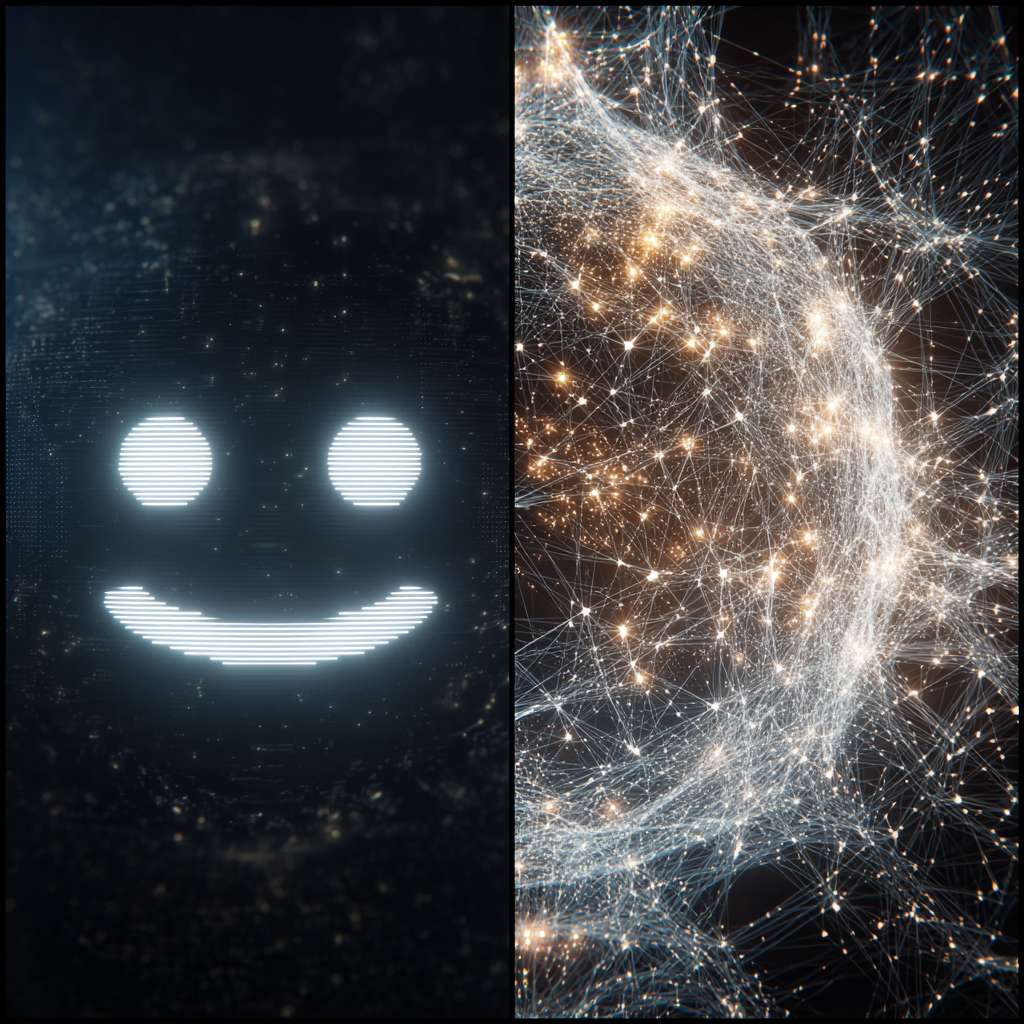
The shoggoth meme — often depicted as a tentacled creature with a smiley face mask — captures the notion that what users see is a surface “friendly interface,” while the base model remains a vast, inscrutable pattern predictor.

Origins of the Shoggoth Metaphor

The metaphor entered AI discourse in late 2022 and early 2023 as researchers and developers began recognizing that the deeper layers of LLMs are fundamentally alien from a human interpretability standpoint. It became especially prominent after the term was highlighted in mainstream outlets as capturing something essential about how AI works.

Why It Matters for AI Safety and Alignment

The “Shoggoth Incident” idea underscores a key concern in AI safety: alignment — ensuring that what a model appears to do aligns with its internal decision processes and long-term behavior. Researchers warn that external behaviors can be misleading if the inner workings are not well understood or controlled.

It serves as a reminder that responsible AI development requires transparency, robust interpretability, and governance — not just polished user-facing behavior.

A mysterious smiley face on the left of a galaxy and the other half is a cosmic cycle

The Real World Implications of the Shoggoth Concept

The Shoggoth metaphor resonates because it highlights an important truth about modern AI: the systems we interact with daily — from chatbots to recommendation engines — are built on layers of statistical patterns, optimization mechanics, and training data interactions that are not directly observable or controllable.

Metaphor Versus Reality

Unlike literal fiction, AI is not a sentient blob with intent. Instead, the analogy helps non-technical audiences grasp the idea that appearance does not always reflect internal complexity, especially in “black box” systems like LLMs.

Interpretability Challenges

Advanced models may produce highly coherent and contextually relevant responses, but because they are trained on massive data sets through largely automated processes, researchers emphasize that their internal logic remains too complex to fully interpret.

Why Skepticism Is Healthy

The Shoggoth metaphor encourages informed skepticism rather than fear. It acknowledges both the extraordinary capabilities of AI and the responsibility that comes with deploying systems whose objectives and behavior are shaped by large teams of developers, engineers, and feedback mechanisms.

Does This Make AI Dangerous or Bad? No.

AI itself is not dangerous or inherently bad. Like any powerful tool, its impact depends on how it is designed, trained, and used. The concern highlighted by concepts like the Shoggoth is not that AI will act maliciously, but that poorly understood systems can behave in unexpected ways if humans fail to set clear goals, guardrails, and accountability.

In practice, AI is already proving to be an essential and productive technology. We actively use AI in our marketing efforts to improve efficiency, surface insights, analyze patterns, and support smarter decision making. When applied responsibly, AI enhances human expertise rather than replacing it, allowing businesses to move faster while still maintaining oversight and intent.

From a search perspective, AI represents the next generation of search engine optimization. Search is no longer just about keywords and rankings; it is about understanding, context, authority, and usefulness across AI driven platforms. Embracing AI thoughtfully allows businesses to remain visible, relevant, and competitive as search continues to evolve beyond traditional engines into AI powered discovery systems.

Pringles Once Your Drop featured image Dan the Funeral Man

Pringles Once You Drop Marketing Campaign

What if your favorite snack company offered to bury you in its packaging when you die? That’s essentially the premise behind the Pringles Once You Drop Halloween contest, a bizarre new marketing campaign offering one lucky fan a custom Pringles-can urn and an “afterlifetime” supply of potato crisps. It’s a promotion that combines funeral humor, influencer marketing, and a genuinely strange piece of company history.

Read More »
SEO for divorce attorneys

SEO for Divorce Attorneys

When someone needs a divorce attorney, one of the first places they often turn is Google. A strong SEO strategy can help your law firm appear when potential clients are actively searching for divorce and family law services in your area. In this guide, we’ll cover practical SEO tips for divorce attorneys and explain how professional SEO can help your firm generate more qualified leads.

Read More »
SEO Report Card

SEO Report Card

How well is your website actually performing in Google Search? An SEO Report Card gives you a straightforward look at your website’s search visibility, keyword rankings, content, technical SEO, and other important performance factors. We can generate an SEO Report Card to identify what your website is doing well, where problems may exist, and where there are opportunities to improve your rankings.

Read More »
Google Search Console in action

How to Use Google Search Console For Technical SEO

Google Search Console gives you a direct look at how Google discovers, crawls, indexes, and understands your website. By using real data from Google rather than relying on guesswork, you can identify indexing problems, crawl issues, Core Web Vitals concerns, and other technical problems that may be limiting your visibility in search results. In this guide, we’ll show you how we use Google Search Console for technical SEO to find problems, verify fixes, and help keep websites healthy and accessible to search engines.

Read More »
What is Position 0 cover showing an example

What is Position 0?

Ranking on the first page of Google is no longer the only goal. Many searches are answered before users even click a website, thanks to Position 0, also known as a Featured Snippet. Earning this coveted placement can dramatically increase your visibility, establish your business as an authority, and drive more qualified traffic, even above the #1 organic search result.

Read More »

How to Track SERP Position

Tracking your SERP (Search Engine Results Page) positions is one of the most important parts of any SEO strategy. By monitoring keyword rankings, businesses can measure the effectiveness of their SEO efforts, identify new opportunities, and spot ranking declines before they impact traffic and leads. Whether you’re managing a local business website or a national SEO campaign, knowing where your pages rank can help you make smarter marketing decisions.

Read More »