
EEAT SEO: What E-E-A-T Means and Why It Matters for Rankings
By Daclaud Lee, SEO Consultant
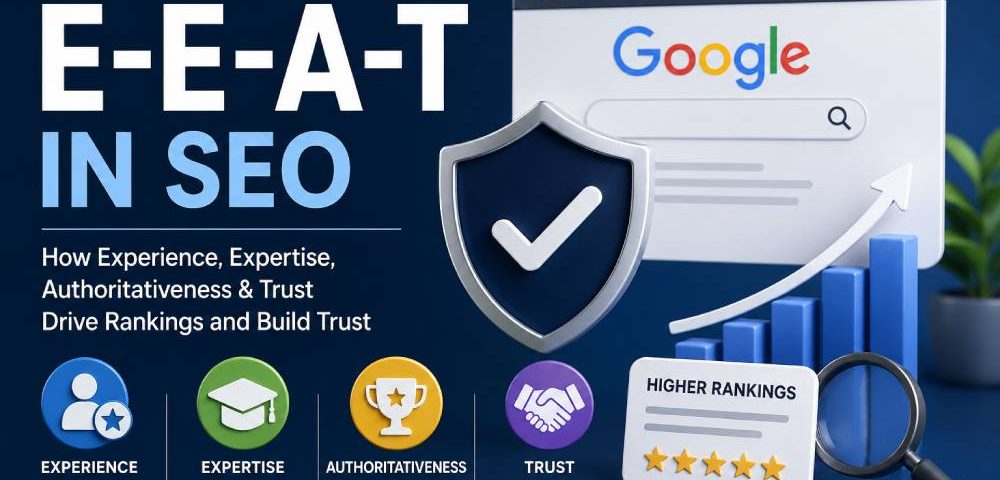
Google has become increasingly focused on content quality, credibility, and trust. That’s where E-E-A-T comes in, a framework Google uses to evaluate the Experience, Expertise, Authoritativeness, and Trustworthiness of content and the people behind it.
While E-E-A-T is not a direct ranking factor, it influences how Google assesses the quality and reliability of a website. Understanding E-E-A-T SEO can help businesses, content creators, and marketers build stronger websites that earn more visibility in search results and AI-powered search experiences.
What Is E-E-A-T in SEO?
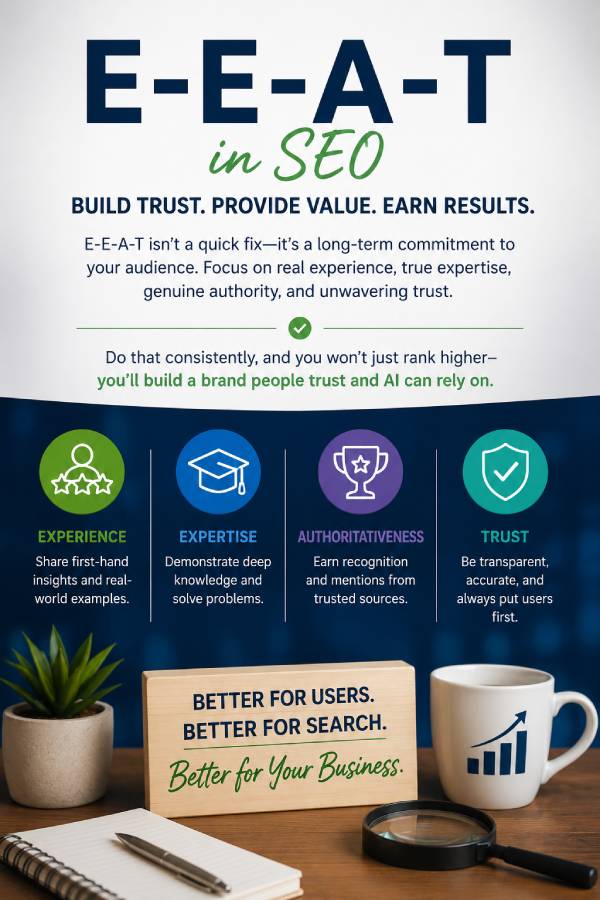
E-E-A-T stands for Experience, Expertise, Authoritativeness, and Trustworthiness. It is a framework Google uses in its Search Quality Evaluator Guidelines to help assess the quality and credibility of content. While E-E-A-T is not a direct ranking factor like page speed or backlinks, it influences how Google evaluates whether content is helpful, reliable, and worthy of appearing in search results.
The addition of Experience emphasizes the importance of first-hand knowledge. Google wants to see evidence that content is created by people who have real-world experience with the topic they are discussing. Businesses can improve their E-E-A-T by publishing accurate information, showcasing author credentials, earning positive reviews, building industry recognition, and maintaining a trustworthy website. Strong E-E-A-T signals can help improve user confidence, increase engagement, and support long-term SEO performance.
The History of E-E-A-T in SEO
The concept of E-E-A-T has its roots in Google’s Search Quality Evaluator Guidelines, which were first introduced to help human quality raters assess the usefulness and credibility of search results. Originally, the framework was known as E-A-T, which stood for Expertise, Authoritativeness, and Trustworthiness. Google placed increasing emphasis on these qualities following several major algorithm updates, particularly those aimed at improving content quality and reducing the visibility of low-value or misleading websites.
In December 2022, Google officially expanded the framework from E-A-T to E-E-A-T by adding an additional “E” for Experience. This change reflected Google’s growing focus on first-hand knowledge and real-world experience. For example, someone who has personally used a product, worked in a profession, or experienced a situation may provide valuable insights even if they are not considered a traditional expert. Today, E-E-A-T serves as a guideline for evaluating content quality, with Trustworthiness remaining the most important component of the framework.
How Does E-E-A-T Work for a New Website?
One of the biggest misconceptions about E-E-A-T is that only large, established websites can benefit from it. In reality, every website starts with little to no authority. Google’s goal is not to reward the oldest website, but to identify content that demonstrates genuine experience, expertise, authority, and trustworthiness. A new website can begin building E-E-A-T from day one by publishing high-quality content, showcasing real-world experience, and providing transparent information about the business or authors behind the site.
For a new website, E-E-A-T is often established through smaller trust signals that accumulate over time. These include creating detailed author biographies, publishing original content based on first-hand experience, earning customer reviews, maintaining accurate business information, obtaining mentions from other reputable websites, and demonstrating expertise within a specific niche. While a new website may not immediately have the authority of a well-established competitor, consistently producing helpful and trustworthy content can help build credibility and improve search visibility as the site grows.
Is E-E-A-T a Ranking Factor?
One of the most common questions in SEO is whether E-E-A-T is a direct Google ranking factor. The answer is both yes and no. Google has stated that E-E-A-T itself is not a measurable ranking factor like page speed, mobile friendliness, or Core Web Vitals. Instead, E-E-A-T serves as a framework that helps Google evaluate the overall quality and credibility of content.
While Google does not assign websites an “E-E-A-T score,” many of the signals associated with E-E-A-T can influence rankings. Positive reviews, expert authors, high-quality backlinks, industry recognition, accurate information, and strong brand signals can all help establish experience, expertise, authority, and trust. In other words, E-E-A-T may not be a direct ranking factor, but the factors that contribute to E-E-A-T can have a significant impact on your website’s search visibility.
How Do I Get Started with E-E-A-T?
Building E-E-A-T doesn’t happen overnight. Like SEO itself, E-E-A-T is something that develops over time as you demonstrate experience, expertise, authority, and trust through your content and online presence. The good news is that most businesses are already doing many of the things that contribute to E-E-A-T—they simply need to showcase them more effectively online.
1. Create an About Us Page
Tell visitors who you are, what your company does, and why you’re qualified to provide your products or services. Include your history, experience, certifications, awards, and any other information that helps establish credibility.
2. Add Author Information
If you’re publishing articles, identify the author and provide a short biography. Explain their experience, qualifications, and expertise related to the topic they are discussing.
3. Publish Original Content
Avoid creating generic content that simply repeats information found elsewhere. Share real-world examples, customer stories, project photos, case studies, and practical insights that demonstrate first-hand experience.
4. Collect Reviews and Testimonials
Customer reviews help build trust and provide evidence that your business delivers on its promises. Encourage satisfied customers to leave reviews on Google, Facebook, Yelp, and industry-specific platforms.
5. Showcase Certifications and Credentials
Display professional licenses, certifications, memberships, awards, and other accomplishments that demonstrate expertise within your industry.
6. Earn Mentions and Backlinks
Build relationships within your industry and community. Media coverage, local news mentions, partnerships, sponsorships, and backlinks from reputable websites can help establish authority.
7. Keep Your Website Accurate and Up to Date
Outdated information can damage trust. Make sure your contact information, services, staff biographies, pricing, and business details remain current and accurate.
8. Focus on Helping Users First
At its core, E-E-A-T is about providing value. Create content that answers questions, solves problems, and helps users make informed decisions. Websites that consistently help their audience are more likely to earn trust, authority, and long-term search visibility.
10 Examples of How E-E-A-T Works in Practice
E-E-A-T isn’t just a theory discussed in Google’s documentation; it’s something that can be seen in real world search results every day. Businesses and websites that demonstrate experience, expertise, authority, and trust often have a significant advantage over competitors that lack those signals. Here are 10 practical examples of how E-E-A-T works in SEO and why it matters for rankings.
1. A Doctor Writing Medical Content
A physician writing about diabetes management demonstrates both experience and expertise. Google is more likely to trust this content than an article written by someone with no medical background.
2. A Home Inspector Explaining Common Defects
A home inspector sharing real inspection photos and discussing actual issues found in homes provides first-hand experience. This helps establish credibility and trust with both users and search engines.
3. Customer Reviews Supporting a Business
A local business with hundreds of detailed reviews demonstrates trustworthiness and authority. Reviews provide user-generated content that reinforces what services a company actually performs.
4. An Auto Repair Shop Publishing Repair Guides
An automotive technician explaining common brake problems based on years of experience offers valuable insights that generic content often lacks. This real-world knowledge strengthens E-E-A-T signals.
5. A Financial Advisor Discussing Retirement Planning
Financial topics fall into Google’s “Your Money or Your Life” (YMYL) category. Content created by a licensed financial professional is generally considered more trustworthy than advice from an anonymous source.
6. Author Bios and Credentials
Displaying author biographies, certifications, licenses, awards, and industry experience helps users and search engines understand who created the content and why they should trust it.
7. Earning Mentions from Trusted Websites
When reputable organizations, news outlets, or industry publications mention your business, it helps build authority. These references act as third-party validation of your expertise.
8. Publishing Original Research and Case Studies
Companies that share original data, case studies, and real-world results demonstrate experience and expertise. Original content often attracts links, citations, and industry recognition.
9. Maintaining Accurate Business Information
Consistent contact information, business hours, policies, and company details help establish trustworthiness. A legitimate business should make it easy for customers to verify who they are and how to contact them.
10. Demonstrating Real Experience with a Product or Service
A product review written by someone who has actually used the product is generally more valuable than a generic summary. Photos, videos, testing results, and personal observations all help demonstrate first-hand experience.
So, How Do You E-E-A-T Exactly?
E-E-A-T works by helping Google evaluate the overall quality, credibility, and reliability of content and the people or organizations behind it. Rather than relying on a single ranking factor, Google looks at a variety of signals that indicate whether a website has real-world experience, subject matter expertise, industry authority, and the trust of its users. The stronger these signals become, the more confidence Google has in presenting that content to searchers.
How to Show Experience
Experience refers to first-hand knowledge of a topic. Google wants to see evidence that the person creating the content has actually used the product, performed the service, visited the location, or lived through the experience being discussed. Businesses can demonstrate experience by sharing case studies, project photos, customer success stories, personal insights, original research, and examples from their day-to-day operations.
How to Establish Expertise
Expertise is demonstrated by showing a deep understanding of a subject. This can include professional credentials, certifications, industry training, years of experience, or consistently publishing accurate and helpful information. Creating comprehensive content, answering common customer questions, and showcasing specialized knowledge can help establish expertise within a specific niche.
How to Establish Authoritativeness
Authority is often earned through recognition from others. Mentions from reputable websites, backlinks from trusted sources, industry awards, media coverage, professional memberships, and positive online reviews can all contribute to authority. The more other people recognize your business as a trusted resource, the stronger your authority signals become.
How to Build Trustworthiness
Trustworthiness is considered the most important component of E-E-A-T. A trustworthy website provides accurate information, clearly identifies who is responsible for the content, offers transparent contact information, maintains a secure website, and delivers a positive user experience. Consistent reviews, honest business practices, privacy policies, and accurate information all help build trust with both users and search engines.
Common E-E-A-T Mistakes
Many website owners understand the importance of E-E-A-T but unknowingly make mistakes that undermine their credibility. Building experience, expertise, authority, and trust takes time, and even small issues can weaken the signals Google and users rely on when evaluating a website. Avoiding these common mistakes can help strengthen your online reputation and improve your long-term SEO performance.
Publishing Generic Content
One of the biggest E-E-A-T mistakes is creating content that simply repeats information already found on dozens of other websites. Generic content provides little evidence of experience or expertise. Instead, focus on sharing original insights, case studies, real-world examples, and unique perspectives that demonstrate first-hand knowledge.
Hiding Author Information
Users want to know who is creating the content they are reading. Articles with anonymous authors or no author information can appear less trustworthy, especially in industries involving health, finance, legal services, or other important topics. Including author biographies and credentials can help establish credibility.
Neglecting Your About Page
Many businesses overlook their About Us page, yet it is one of the most important trust-building pages on a website. Visitors want to know who you are, how long you’ve been in business, and why they should trust you. A weak or missing About page can hurt both user confidence and E-E-A-T signals.
Failing to Collect Reviews
Reviews help demonstrate trustworthiness and provide independent validation of your products or services. Businesses that neglect reputation management often miss valuable opportunities to build trust with both customers and search engines.
Relying Entirely on AI Content
AI can be a useful tool, but publishing unedited AI-generated content without adding human expertise or experience can result in generic, low-value pages. The strongest content combines AI efficiency with real-world knowledge and professional oversight.
Outdated or Inaccurate Information
Trust is easily lost when information becomes outdated. Broken links, inaccurate business details, outdated statistics, and obsolete recommendations can negatively impact both user experience and credibility.
Ignoring Website Trust Signals
Missing contact information, privacy policies, terms of service, secure HTTPS connections, and clear business information can raise questions about a website’s legitimacy. Trustworthy websites make it easy for users to verify who they are and how to contact them.
Chasing Authority Instead of Building It
Many website owners focus solely on acquiring backlinks while ignoring the underlying expertise that creates authority in the first place. True authority is earned by consistently providing valuable content, helping users, and building a positive reputation within an industry.
Can AI-Generated Content Meet E-E-A-T Standards?
One of the biggest misconceptions in modern SEO is that Google automatically penalizes AI-generated content. In reality, Google has stated that it focuses on the quality and usefulness of content rather than how it was created. This means AI-generated content can meet E-E-A-T standards if it is accurate, helpful, and demonstrates real experience and expertise. The problem arises when AI is used to mass-produce low-quality articles that provide little value to users.
The challenge with AI-generated content is that artificial intelligence does not possess real-world experience. It can summarize information, identify patterns, and generate text, but it cannot personally inspect a home, repair a transmission, represent a client in court, or perform a medical procedure. For this reason, businesses should use AI as a tool to assist subject matter experts rather than replace them. Content that combines AI efficiency with human experience, expertise, and editorial oversight is far more likely to satisfy E-E-A-T principles than content generated entirely by automation.
Best Practices for AI Content and E-E-A-T
- Review and fact-check all AI-generated content.
- Add original insights and first-hand experience.
- Include real examples, case studies, and customer stories.
- Use qualified authors and contributor biographies.
- Support claims with reputable sources and citations.
- Update content regularly to ensure accuracy.
- Focus on helping users rather than publishing content at scale.
When used responsibly, AI can be a powerful content creation tool. However, E-E-A-T still depends on the people behind the content. The websites that perform best in search results are typically those that combine technology with genuine human knowledge, experience, and trustworthiness.
Ready to Improve Your E-E-A-T?
Building strong E-E-A-T can help improve your rankings, increase trust, and strengthen your online presence. Our team can create a customized SEO strategy designed to build experience, expertise, authority, and trust for your business. Contact us today for a free marketing quote and learn how to get started.

What is Position 0?
Ranking on the first page of Google is no longer the only goal. Many searches are answered before users even click a website, thanks to Position 0, also known as a Featured Snippet. Earning this coveted placement can dramatically increase your visibility, establish your business as an authority, and drive more qualified traffic, even above the #1 organic search result.
How to Track SERP Position
Tracking your SERP (Search Engine Results Page) positions is one of the most important parts of any SEO strategy. By monitoring keyword rankings, businesses can measure the effectiveness of their SEO efforts, identify new opportunities, and spot ranking declines before they impact traffic and leads. Whether you’re managing a local business website or a national SEO campaign, knowing where your pages rank can help you make smarter marketing decisions.

Free Veteran Owned Logo
Free Veteran Owned Logo Show your service with pride and let customers know who they’re supporting. This free Veteran Owned logo is perfect for your website, social media, vehicles, and printed marketing materials. Just right click on the image and “Save As”. This is royalty free, so you can use it anywhere, and make your business stand out with a badge that builds trust instantly. Use This Logo to Represent Your Service and Your Business This free Veteran Owned logo can be used across any type of business to proudly showcase that you served your country. Whether you’re running a local service company, an online store, or a professional practice, adding this badge to your website, social media, vehicles, and
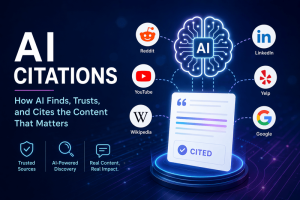
How to Get Your Business Cited by AI Using High-Authority Platforms
If you’re trying to rank in AI search results, your website alone isn’t enough anymore. The platforms AI trusts most are places like Reddit, YouTube, LinkedIn, and Yelp, where real content and engagement happen daily. If your business isn’t showing up on these sites, you’re missing a major piece of the visibility game.

How to Use ChatGPT as Your Feng Shui Business Consultant
What if you could turn AI into your personal Feng Shui consultant for business? Instead of guessing layouts, colors, and flow, you can use ChatGPT to apply structured design principles with precision. Here’s how to use ChatGPT to optimize your space, brand, and environment for alignment and results.
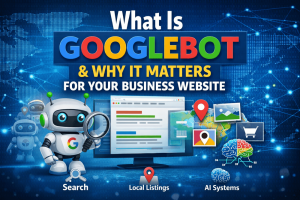
What Is Googlebot and Why It Matters for Your Website
Most business and website owners assume that when Google scans the internet, there is just one robot doing the work. For years people in marketing simply called it “Googlebot” and left it at that. But the reality today is much more complicated, and understanding it can help you see why your business website ranks the way it does.
