

SEO Report Card

SEO Report Card

By Daclaud Lee – SEO / AEO Consultant

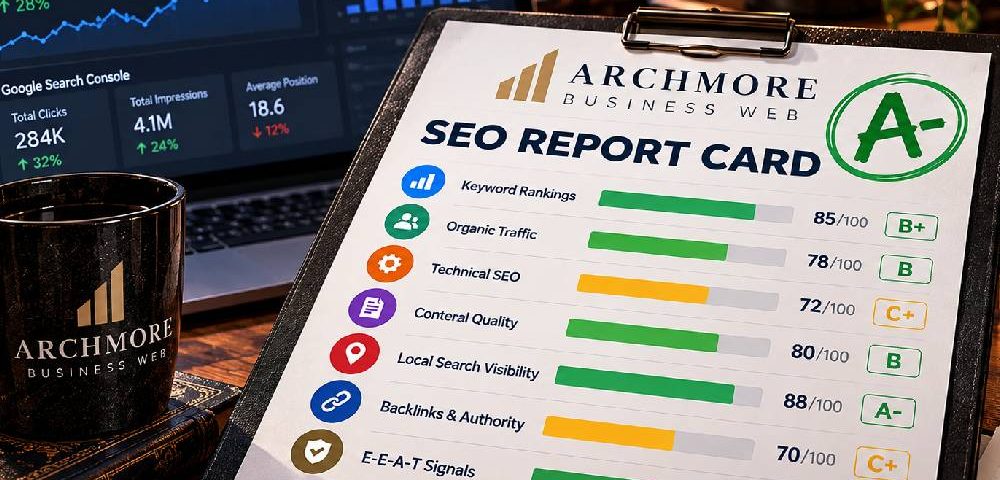
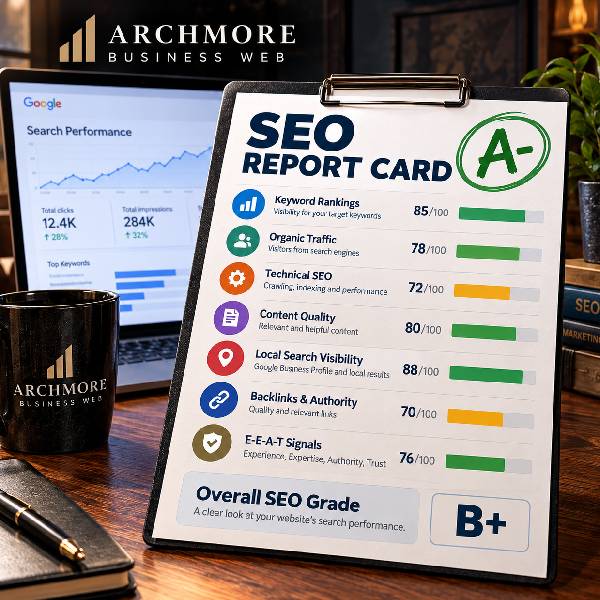
How well is your website actually performing in Google Search? An SEO Report Card gives you a straightforward look at your website’s search visibility, keyword rankings, content, technical SEO, and other important performance factors. We can generate an SEO Report Card to identify what your website is doing well, where problems may exist, and where there are opportunities to improve your rankings.

Find Out How Your Website Really Measures Up

Is your website doing everything it can to bring your business more visibility in Google? An SEO Report Card from Archmore Business Web gives you a clear evaluation of your keyword rankings, organic traffic, technical SEO, content quality, local search visibility, backlinks, and E-E-A-T signals.

We’ll show you what’s working, what needs attention, and where we see opportunities for improvement. Instead of guessing about your SEO, you’ll have a clearer picture of where your website stands and what you can do next.

Ready to See Your SEO Grade?

Request your SEO Report Card from Archmore Business Web today and find out how your website is performing in search.

Click here: Get A FREE SEO Report

SEO Report Card

What Is an SEO Report Card?

An SEO Report Card is an evaluation of how well a website is optimized for search engines like Google. It reviews important SEO factors such as keyword rankings, organic traffic, technical performance, content quality, local search visibility, backlinks, and E-E-A-T signals. The goal is to provide a clear picture of what your website is doing well, identify potential problems, and highlight opportunities to improve your visibility in search results.

Keyword Rankings

Keyword rankings show where your website appears in search results for specific searches that are important to your business. For example, a local business might track where it ranks when someone searches for its primary services combined with the city or service area. Tracking these rankings over time helps us determine whether your search visibility is improving, declining, or remaining stable.

Organic Traffic

Organic traffic refers to visitors who reach your website through unpaid search results rather than advertisements. We can use tools such as Google Analytics and Google Search Console to evaluate how much traffic search engines are generating and which pages are attracting those visitors. Increasing qualified organic traffic is one of the primary goals of SEO.

Technical Performance

Technical SEO performance looks at whether search engines can properly access, crawl, understand, and index your website. This can include indexing problems, broken links, page speed, mobile usability, HTTPS, redirects, sitemaps, and other technical issues. Even excellent content can struggle in search if technical problems prevent Google from properly accessing or understanding it.


Content Quality

Content quality evaluates whether your website provides useful, relevant, and informative content for the people you are trying to reach. We look at whether important services are adequately explained, pages satisfy the intent behind their target searches, information is organized clearly, and content provides something genuinely useful rather than simply repeating keywords.

Local Search Visibility

Local search visibility measures how easily customers can find your business when searching within your geographic market. This can include your visibility in traditional Google search results as well as your Google Business Profile and Google Maps presence. For businesses serving specific cities or communities, strong local visibility can be particularly important.

Backlinks

Backlinks are links from other websites pointing to your website. Quality backlinks can help search engines understand that other websites recognize your business or content as a useful resource. An SEO Report Card can examine the quantity and quality of these links while also identifying opportunities to naturally strengthen your website’s authority.


E-E-A-T Signals

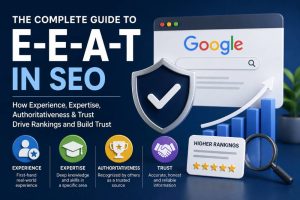
E-E-A-T stands for Experience, Expertise, Authoritativeness, and Trustworthiness. These concepts help us evaluate whether a website demonstrates genuine first-hand experience, subject-matter knowledge, a strong reputation, and reasons for visitors to trust the business and its content. Examples can include detailed service information, author or company credentials where relevant, original photos and examples, customer reviews, accurate business information, transparent policies, and content that demonstrates real knowledge of the subject.

Ready to See How Your Website Measures Up?

Stop guessing about your SEO. Get your SEO Report Card from Archmore Business Web and discover what’s working, what needs improvement, and where your biggest opportunities are.

About the Author

Daclaud Lee is a digital marketing professional, author, and business consultant who has worked in SEO since 2010. A graduate of Franklin University’s Digital Marketing program, he has spent more than 15 years helping businesses improve their online visibility through search engine optimization, website development, content strategy, and digital marketing.

Through his work as a SEO consultant, Daclaud combines hands-on SEO experience with a practical understanding of how businesses use their websites to attract customers and generate leads. He also writes on topics related to SEO, digital marketing, business, and technology.

More From the Blog

Want to learn more about SEO, website optimization, and digital marketing? Explore more articles from the Archmore Business Web Blog for practical tips, strategies, and insights you can use to improve your website and online visibility.

Continue exploring the Digital Marketing Journal and discover more ways to grow your online presence with Archmore Business Web.

SEO for divorce attorneys

SEO for Divorce Attorneys

When someone needs a divorce attorney, one of the first places they often turn is Google. A strong SEO strategy can help your law firm appear when potential clients are actively searching for divorce and family law services in your area. In this guide, we’ll cover practical SEO tips for divorce attorneys and explain how professional SEO can help your firm generate more qualified leads.
Read More »
Google Search Console in action

How to Use Google Search Console For Technical SEO

Google Search Console gives you a direct look at how Google discovers, crawls, indexes, and understands your website. By using real data from Google rather than relying on guesswork, you can identify indexing problems, crawl issues, Core Web Vitals concerns, and other technical problems that may be limiting your visibility in search results. In this guide, we’ll show you how we use Google Search Console for technical SEO to find problems, verify fixes, and help keep websites healthy and accessible to search engines.
Read More »
What is Position 0 cover showing an example

What is Position 0?

Ranking on the first page of Google is no longer the only goal. Many searches are answered before users even click a website, thanks to Position 0, also known as a Featured Snippet. Earning this coveted placement can dramatically increase your visibility, establish your business as an authority, and drive more qualified traffic, even above the #1 organic search result.
Read More »

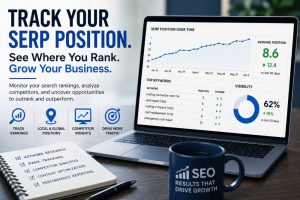
How to Track SERP Position

Tracking your SERP (Search Engine Results Page) positions is one of the most important parts of any SEO strategy. By monitoring keyword rankings, businesses can measure the effectiveness of their SEO efforts, identify new opportunities, and spot ranking declines before they impact traffic and leads. Whether you’re managing a local business website or a national SEO campaign, knowing where your pages rank can help you make smarter marketing decisions.
Read More »