


How to Rank as “the Best” in AI Search

By Daclaud Lee

Ranking in AI search is straightforward until competition enters the picture. AI systems operate on context and evidence, not aspiration. The more competitive your niche, the more aggressively the algorithm compares you against others using measurable signals.

You can build all the service area pages you want, but if stronger competitors have more reviews, better geographic alignment, and deeper authority, AI will prioritize them. Proximity still matters. Review count still matters. Overall reputation still matters. In competitive markets, the “star players” usually surface first because the data supports them.

What You Must Do to Rank as “Best” in AI Search

Everyone wants AI to include them in rankings for the “best” at what they do. However, very few businesses understand what that word actually triggers inside AI systems. When someone searches for the “best plumber,” “best med spa,” or “best HVAC company,” AI evaluates comparative signals. It does not reward self-declared titles.

If you want AI to consider your business among the best, you need structured dominance across multiple layers of trust. This is not about one tactic. It is about stacking measurable signals in your favor.

Ranking as “best” in modern search is no longer just optimizing your website for search engines. It is SEO fueling AEO (Answer Engine Optimization) and GEO (Generative Engine Optimization). AI does not crown you the best because you want to claim it. It analyzes your digital footprint, compares you to competitors, and determines whether the evidence supports that classification.

Build Strong Foundational SEO

AI pulls from the indexed web. If your website is thin, poorly structured, or technically weak, your visibility ceiling is limited.

You need:

  • Optimized service pages
  • Clear location pages
  • Clean internal linking
  • Structured data markup
  • Fast load speeds
  • Clear, contextual headings

SEO is the base layer. Without it, AEO and GEO cannot function properly.

Win the Review War

When someone searches “best,” AI looks for social proof.

Key signals include:

  • Total review count
  • Review recency
  • Review velocity
  • Overall rating
  • Review keyword relevance

If your competitor has ten times your review count, AI has statistical evidence to favor them. You cannot claim your way past that.

If you want to rank as “best,” build a systematic review acquisition strategy.

Strengthen Geographic Authority

AI interprets queries literally. If someone asks for the best service provider in a city, the system prioritizes businesses with strong geographic signals.

That means:

A legitimate physical address in the city

Consistent NAP across directories

  • Location-specific service pages
  • Local backlinks
  • Local brand mentions
  • Serving an area is not the same as being established in it.
  • Earn Third-Party Validation
AI software ranking different businesses based on location and reviews

AI trusts external validation more than self-promotion.

That includes:

  • Media features
  • Industry awards
  • Chamber listings
  • Local sponsorships
  • Case studies
  • Verified testimonials

If nobody else recognizes you, AI has limited evidence to classify you as the best.

Create Content That Supports Comparative Intent

Ranking for “best” requires content that demonstrates why you stand out.

  • This means publishing:
  • Comparison style content
  • Detailed service breakdowns
  • Before and after examples
  • Transparent pricing explanations
  • FAQs addressing competitor comparisons

AI needs contextual support to understand your differentiators.

How SEO and AEO Work Together

If you want visibility in AI search, you cannot skip traditional SEO. AEO, or Answer Engine Optimization, does not replace SEO. It sits on top of it. AI systems pull answers from indexed, structured, authoritative web content. If your SEO foundation is weak, your AEO performance will be weak.

SEO builds crawlability, structure, topical authority, and index presence. It ensures your service pages, location pages, and supporting content are discoverable and contextually aligned. Without that infrastructure, AI has nothing reliable to extract.

AEO builds on that foundation by optimizing for how questions are asked and answered. It focuses on:

  • Clear, direct responses
  • FAQ structure
  • Schema markup
  • Context rich headings
  • Concise authority statements

But here is the critical point: AI cannot cite what it cannot trust. And trust is built through SEO fundamentals — backlinks, reviews, domain authority, clean site architecture, and consistent entity signals.

Think of it this way:

SEO makes you discoverable.
AEO makes you quotable.

You need both.

If your site ranks but lacks clear structured answers, AI may overlook you. If your content is well structured for answers but lacks authority, AI may not trust you enough to cite you.

In modern search, SEO feeds AEO. And AEO amplifies strong SEO.

How PPC Can Leapfrog SEO and AEO

Here’s the part nobody in organic search likes to admit.

PPC can absolutely beat SEO and AEO in certain scenarios.

Why? Because Google controls the interface. And when there’s commercial intent behind a query, Google often prioritizes sponsored placements before anything organic shows up. In many cases, paid ads appear above organic listings. Sometimes there’s no AI Overview at all if the query is clearly transactional. The system shifts into revenue mode.

If someone searches “emergency plumber near me” or “buy HVAC system Columbus,” Google knows that’s high intent. You may see ads first. Then the map pack. Then maybe organic listings. AI Overview doesn’t always trigger for those types of searches because the platform prioritizes monetization and immediate action.

That doesn’t mean SEO and AEO are irrelevant. It means they serve different roles.

SEO and AEO build long term authority and visibility. They help you show up for informational queries, comparison queries, and research driven searches. They position you as credible. They get you cited. They build trust.

PPC, on the other hand, can shortcut positioning for high intent queries — as long as you’re willing to pay.

But here’s the catch.

The second you turn off the budget, you disappear.

SEO and AEO compound. PPC rents.

In competitive industries, the smartest businesses don’t choose one over the other. They understand how the interface works. They use PPC to capture immediate demand while building organic authority underneath.

Google prioritizes revenue when it can.
But authority still wins over time.

If you want to dominate search, then you need to understand all three layers: SEO, AEO, and PPC — and when each one controls the screen.

Build the Signals, Earn the Label

Ranking as “the best” in AI search is not about hacks, shortcuts, or secret tactics. It is about building measurable dominance across reviews, location signals, authority, and structured content. AI systems are simply reflecting the strength of your digital footprint back to the user.

If you want to win in AEO, GEO, and traditional SEO, you must first build the foundation. Strong technical SEO feeds AI visibility. Real reviews feed reputation signals. Third-party validation feeds authority. Everything compounds.

If this article helped clarify how to rank as the best in AI search, continue exploring our other SEO articles. Learn how backlinks really work, how to spot SEO grifters, how to structure your digital footprint, and how to build long-term authority the right way.

The businesses that win in AI search are not the loudest. They are the most substantiated. Let us help your business start building the proof.

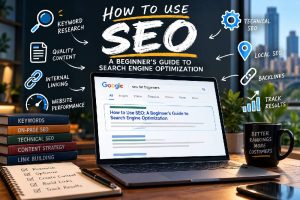
SEO for beginners

The Beginner’s Guide to SEO (Search Engine Optimization)

Are you new to SEO? Do you want to know more about what a SEO professional does? The Archmore Guide to SEO provides the basics of Search Engine Optimization so you understand exactly what SEO is and how it can help with your website and keyword rankings. It also gives you a better idea of what we do on a daily basis as SEO consultants and as a Digital Marketing company. What is SEO? SEO in a nutshell is the process of getting your website or web page indexed in a search engine. Black Hat SEO and White Hat SEO There are many types of SEO practices, the two types are Black Hat SEO and White Hat SEO. Obviously Black Hat SEO

Read More »
Pringles Once Your Drop featured image Dan the Funeral Man

Pringles Once You Drop Marketing Campaign

What if your favorite snack company offered to bury you in its packaging when you die? That’s essentially the premise behind the Pringles Once You Drop Halloween contest, a bizarre new marketing campaign offering one lucky fan a custom Pringles-can urn and an “afterlifetime” supply of potato crisps. It’s a promotion that combines funeral humor, influencer marketing, and a genuinely strange piece of company history.

Read More »
SEO for divorce attorneys

SEO for Divorce Attorneys

When someone needs a divorce attorney, one of the first places they often turn is Google. A strong SEO strategy can help your law firm appear when potential clients are actively searching for divorce and family law services in your area. In this guide, we’ll cover practical SEO tips for divorce attorneys and explain how professional SEO can help your firm generate more qualified leads.
Read More »
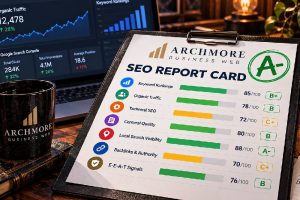
SEO Report Card

SEO Report Card

How well is your website actually performing in Google Search? An SEO Report Card gives you a straightforward look at your website’s search visibility, keyword rankings, content, technical SEO, and other important performance factors. We can generate an SEO Report Card to identify what your website is doing well, where problems may exist, and where there are opportunities to improve your rankings.
Read More »
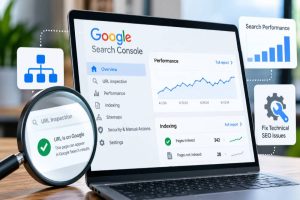
Google Search Console in action

How to Use Google Search Console For Technical SEO

Google Search Console gives you a direct look at how Google discovers, crawls, indexes, and understands your website. By using real data from Google rather than relying on guesswork, you can identify indexing problems, crawl issues, Core Web Vitals concerns, and other technical problems that may be limiting your visibility in search results. In this guide, we’ll show you how we use Google Search Console for technical SEO to find problems, verify fixes, and help keep websites healthy and accessible to search engines.
Read More »
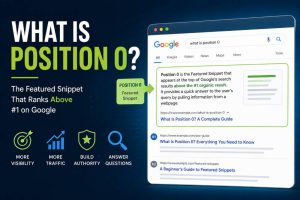
What is Position 0 cover showing an example

What is Position 0?

Ranking on the first page of Google is no longer the only goal. Many searches are answered before users even click a website, thanks to Position 0, also known as a Featured Snippet. Earning this coveted placement can dramatically increase your visibility, establish your business as an authority, and drive more qualified traffic, even above the #1 organic search result.

Read More »